
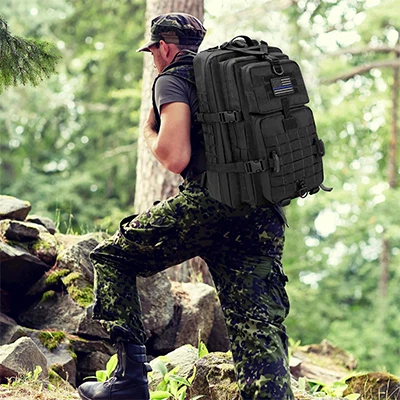
Tactical military backpacks were initially designed for military personnel to provide a combat advantage. They are equipped with various features, including hydration packs, MOLLE webbing for modular lightweight load-bearing equipment, and ammunition pouches, all of which effectively enhance a soldier’s combat effectiveness. Furthermore, the coyote brown, olive green, and camouflage designs help conceal movement in combat environments, reducing the chance of being detected by the enemy. Over time, tactical military backpacks, with their advantages in capacity and practicality, have also begun to be used in our daily activities, such as hiking and mountaineering. For many people, choosing a suitable tactical military backpack is not easy. But don’t worry, USLINT has compiled the guide to help you find a comfortable, durable, fully functional, and efficiently organized tactical military backpack.
Materials
tactical military backpacks were originally designed for military and law enforcement personnel, therefore they use tough and durable materials to withstand harsh environments and rough handling, ensuring they are not easily torn or damaged.
- Cordura: Cordura is tear-resistant, abrasion-resistant, and durable. tactical military backpacks made from Cordura offer excellent durability, a characteristic that has led the US military to use Cordura fabric for over 45 years.
- Ballistic Nylon: Developed by DuPont, ballistic nylon was used as a material for bulletproof vests during World War II, demonstrating its toughness and durability.
- Rip-resistant Fabric: While less tough than Cordura and ballistic nylon, ripstop fabric still offers high durability compared to other fabrics and is relatively lightweight and comfortable.
- Polyester Fiber: Polyester fiber is lightweight and offers some durability, though not as good as Cordura and ballistic nylon, it is sufficient for everyday use, making it a common choice for tactical military backpacks.
Sizes
Tactical military backpacks are available in sizes from 5L to 60L. Within this range, we categorize tactical military backpacks into three different styles: EDC (Everyday Carry) tactical military backpacks, 24-hour tactical military backpacks, and 3-day travel tactical military backpacks.
EDC Tactical Military Backpack
EDC tactical military backpacks are small, everyday-carry backpacks with capacities ranging from 5L to 35L. They are primarily used to store essential everyday items such as mobile phones, tablets, food, and tools.
24-Hour Tactical Military Backpack
24-hour tactical military backpacks are larger than EDC tactical military backpacks, typically with a capacity of 30L to 40L. They can hold more gear, such as changes of clothes, sleeping bags, and more food and water, meeting the needs of overnight or longer outdoor missions.
3-Day Trip Tactical Military Backpack
3-day trip tactical military backpacks have capacities ranging from 40L to 65L or even larger. Besides accommodating gear needed for multi-day trips, they also possess many features similar to mountaineering backpacks, such as a professional carrying system, ergonomic design, and tool attachment points.
Load System
A well-designed tactical military backpack, in addition to its storage capacity, should provide a convenient and comfortable carrying experience, which relies heavily on its load system.
Shoulder Straps
First and foremost, the shoulder straps are adjustable, which is convince to allowing users to customize their length to their needs and body curves for a better fit to their back. Tactical military backpacks rarely use straight shoulder straps, opting instead for curved or integrated straps. Curved straps better conform to the natural curves of the backpack, providing a more comfortable ergonomic experience. Integrated straps are more secure and less prone to slipping.
Sternum Straps
Sternum straps reduce the tactical military backpack swaying during movement, further enhancing stability and reducing strain. They also transfer some of the tactical military backpack’s weight to the sternum, relieving pressure on the shoulders and collarbone-crucial for extended carrying trips.
Waist Belt
Waist belts transfer some of the tactical military backpack’s weight to the hips. Adjustments allow the padded portion of the belt to fit snugly above the iliac crest, providing better support for the backpack’s weight. It is not only ergonomically designed, but also allows for faster and farther movement under load, while burning less heat.
Frame
The frame increases the rigidity of a tactical military backpack and further transfers weight to the back, making it an indispensable component.
- Back Panel: Besides providing support, the back panel prevents the tactical military backpack from collapsing or deforming under load. Furthermore, the back panel’s design affects carrying comfort, such as ergonomic design and integrated ventilation systems.
- Internal Frame: Large tactical military backpacks may have an internal aluminum support frame that maintains the backpack’s shape and transfers weight from the shoulders to the hips.
- Compression Straps: Adjustable compression straps on the sides of a tactical military backpack allow for adjustment of the backpack’s expansion and flatness, bringing the weight closer to the back. Adjusting the compression straps can compress a half-full backpack to reduce internal movement or compress any excess weight for easier carrying.
- Rear Loading Straps: The rear loading straps of a tactical military backpack are primarily used to secure bulky items that are inconvenient to pack inside, such as sleeping bags or blankets. They are typically located at the back or bottom of the backpack.
- Side Straps: Side straps can secure quickly accessible equipment, such as entrenching tools, shovels, and trekking poles, saving time.
Opening and Closing Methods
Tactical military backpacks prioritize ease of use in their opening and closing mechanisms to save time. Let’s look at the common opening and closing methods used in tactical military backpacks.
- A fully unfolded design allows for compartmentalized storage and easy, quick access to items within the compartments.
- The front flap can be fully opened, providing a clear view of the backpack’s internal structure and the placement of items, facilitating easy access.
- A top opening design ensures that items are packed tightly, preventing them from tipping over or scattering when the backpack is upright.
- The Y-shaped opening design allows the front of the tactical military backpack to be fully opened, providing a direct view of the internal structure and facilitating access to items.
- The roll-up top opening, combined with a buckle, enhances the backpack’s seal and waterproofing, making it ideal for use in unpredictable weather conditions.
- The side openings, serving as an auxiliary opening, allow for easy and quick access to items stored at the bottom without unzipping the top or disturbing the contents of the bag.
Organization
Storage is crucial for tactical military backpacks. Neat and organized packing allows for quick retrieval when needed, improving efficiency. Therefore, tactical military backpacks typically feature multiple pockets to meet the needs of compartmentalized storage, including:
- Main Compartment: This is the largest compartment, primarily used for storing larger and more important equipment.
- Front Pocket: Located in front of the main compartment, it usually has a zipper and is mainly used for storing smaller items.
- Laptop Cover: Modern tactical military backpacks may include a laptop cover with padding to provide cushioning and protect the laptop from impacts.
- Concealed Weapon Compartment: Since carrying a holster and drawing a weapon while wearing a backpack is inconvenient, tactical military backpacks often have a dedicated concealed compartment for storing weapons.
- Side Pockets: Side pockets are typically used to store water bottles or other items that require immediate access.
- Eyeglasses Pocket: Located in the main compartment of a tactical military backpack. The backpack may include a microfiber-lined eyeglass case to protect glasses;
- Document pockets: These can store ID cards, maps, notebooks, etc., ensuring organized storage and easy access;
- Pen slots: To address the issue of pens and other items easily slipping to the bottom of the backpack, tactical military backpacks will have internal slots specifically designed for pens or other small items;
MOLLE Webbing
MOLLE webbing, widely used by the US military, has been increasingly incorporated into tactical military backpacks. It’s a loop-shaped webbing system sewn onto bulletproof vests or backpacks, facilitating connection with other MOLLE-compatible equipment to expand storage capacity. For example, adding storage pockets to MOLLE webbing allows users to store magazines, cell phones, flashlights, and radios, easily accessing items without removing the backpack and unzipping, improving operational efficiency.
Hydration Bladders
The design of hydration bladders enhances the practicality of tactical military backpacks. Simply place a rubber hydration bladder inside the tactical military backpack, and drink easily by passing the bladder through a pre-designed hose channel in the backpack. This hydration solution greatly enhances outdoor survival and combat capabilities.
The above is a structural analysis of tactical military backpacks. We believe our explanation has given you a clearer and deeper understanding of tactical military backpacks. However, choosing and customizing a tactical military backpack requires comprehensive consideration of your brand or customer needs. USLINT focuses on providing reliable and quality-tested tactical military backpack solutions. We can tailor-make tactical military backpacks according to your brand needs and applicable scenarios, which will help enhance your brand image and add value to your business.
