
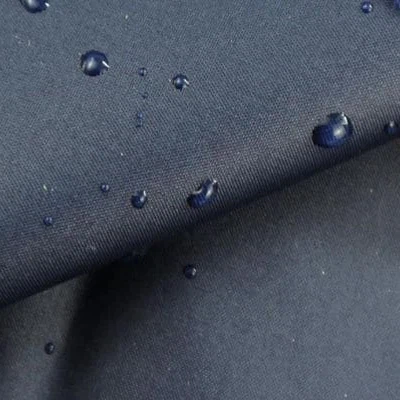
Nylon backpacks offer many advantages, including lightness, durability, easy cleaning, and water resistance. While nylon backpacks are waterproof, this waterproofing is achieved through special treatment. This means that the raw material nylon itself is not inherently waterproof. Today, we’ll delve into the waterproof properties of nylon, including its reaction to water and the treatments that make it waterproof.
Is Nylon Waterproof?
As a professional manufacturer of outdoor sports backpacks, USLiNT ASIA can confirm that nylon fabric is only moderately waterproof. Nylon contains tiny water-repellent “islands” connected by strong molecular bonds, effectively preventing small water droplets from penetrating the fabric, allowing nylon to withstand light rain.
However, because nylon absorbs water, prolonged exposure to light rain or humid conditions can cause it to become soaked and potentially swell and deform. Therefore, to ensure optimal storage of nylon fabrics, USLiNT ASIA has installed a dehumidification system in its warehouse to prevent degradation of nylon’s performance due to water absorption, ensuring customers receive high-quality nylon outdoor sports backpacks.
Is Nylon Waterproof or Water-Resistant?
Before determining whether nylon is waterproof or water-resistant, let’s first examine the differences between the two definitions:
Waterproof fabrics completely block moisture from entering the fabric. Once water accumulates on the surface, it slides off and cannot penetrate the fabric interior, such as TPU and PVC composite fabrics.
Water-resistant fabrics, such as nylon, offer some degree of water resistance, but moisture can still penetrate.
Factors Affecting Nylon’s Waterproofness
Nylon’s water resistance is affected by a variety of factors. USLiNT ASIA summarizes the following:
1. Higher ambient humidity increases the likelihood that nylon will absorb moisture. High temperatures also accelerate the movement of water molecules, making it easier for them to penetrate the nylon, reducing its water resistance.
2. Thicker, denser-woven nylon has smaller gaps in its internal structure, making it more difficult for water to penetrate. Compared to thinner, looser nylon fabrics, it exhibits higher water resistance.
3. Different types of nylon fabrics also have different water resistance properties. For example, 20D nylon absorbs more water than 7D nylon.
4. Nylon fabrics with surface coatings are more water-resistant than plain nylon fabrics.
Water Pressure Resistance of Different Nylon Fabrics
The water pressure resistance of nylon fabrics can be measured by its hydrostatic pressure resistance (HH) value. The higher the value, the better the water pressure resistance and the less likely it is to leak. The following are the hydrostatic pressure resistance values for several common nylon fabrics:
7D nylon: 7D nylon is lightweight and breathable, but its HH value is only between 1000 and 2000 mm, making it less durable and unsuitable for outdoor backpacks.
20D nylon: Compared to 7D nylon, 20D nylon is slightly more durable, with an HH value between 3000 and 4000 mm, but it’s still not high enough for outdoor backpacks.
40D: 40D nylon is not only elastic and durable, but also boasts an HH value of 5000 mm, making it suitable for outdoor backpacks.
400D: 400D has an HH value of up to 20,000 mm, offering excellent water pressure resistance. 400D nylon is also cut-resistant, effectively preventing damage from scratches. It’s a common fabric used in high-end outdoor backpacks.
How to Improve Nylon Fabric’s Waterproofness
There are many ways to improve nylon fabric’s water resistance, primarily by optimizing its structure and applying a coating.
1. During the manufacturing process, weaving the nylon fabric more tightly can improve its water resistance.
2. Adding a coating such as rubber or polyurethane to the nylon surface can further enhance its water resistance.
When manufacturing nylon backpacks, manufacturers will determine the type of nylon based on customer needs and budget, such as whether to use regular nylon or high-denier nylon, and whether to choose coated or uncoated nylon.
How to Clean a Nylon Backpack?
To maintain the performance of your nylon backpack, follow these precautions:
1. Use mild detergent and warm water whenever possible. Avoid using detergents containing chlorine or acids to prevent damage to the nylon backpack’s surface coating.
2. Check the care label to determine whether the backpack is for hand or machine wash. If hand washing is required, avoid scrubbing the backpack’s surface vigorously with a brush to avoid damaging the coating. When machine washing, please turn your backpack inside out and use the gentle cycle.
3. When drying your backpack, always turn it inside out and store it in a cool, well-ventilated area, away from direct sunlight that could damage the fabric and coating.
USLiNTASIA recommends inquiring about the waterproof rating of your nylon backpack before purchasing it to avoid any issues with future use. We offer a variety of nylon backpacks with varying waterproof ratings, and we also support custom options. Please contact us!