
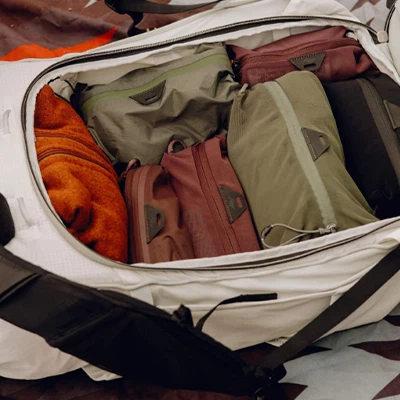
The main fabric of an outdoor backpack is crucial, as it affects its lifespan, wear resistance, and functionality. But did you know that the lining fabric is equally important? A good lining fabric can effectively enhance the backpack’s comfort, waterproofness, and breathability. As a professional outdoor backpack manufacturer, USLiNT ASIA will share with you the commonly used lining fabrics for outdoor backpacks.
The Importance of Lining Fabric
Lining fabric can effectively enhance the functionality of an outdoor backpack, including strengthening its structure, protecting its contents, and improving the user experience.
Increasing Load-Bearing Capacity
Well-crafted lining fabrics also offer a certain degree of support. Therefore, compared to single-layer outdoor backpacks, lining-based outdoor backpacks offer a greater load-bearing capacity.
Increasing Support
Some stiff materials (such as canvas linings) can provide support for outdoor backpacks, preventing them from sagging and collapsing, thereby better preventing items from shifting. Furthermore, this support can enhance the overall aesthetics of the backpack.
Improved Durability
Lining fabrics also provide some protection, especially when carrying fragile, sharp, or liquid-laden items. For example, EVA linings provide excellent cushioning, protecting delicate items; sturdy canvas linings reduce the risk of sharp objects scratching an outdoor backpack; and waterproof nylon linings protect items from rain damage.
What Lining Fabrics Are Suitable for Outdoor Backpacks?
Nylon Lining
Nylon lining is a common lining material for most outdoor backpacks. Besides being relatively low-cost, nylon linings are also lightweight, soft, and abrasion-resistant. Coating treatments can also make them waterproof. Using nylon linings effectively protects the inner wall of the main compartment of an outdoor backpack, reducing the risk of damage from scratches or friction.
Polyester Lining
Like nylon linings, polyester linings are affordable, lightweight, and durable. They are also waterproof, moisture-resistant, wrinkle-resistant, and easy to clean. Using a polyester lining effectively keeps items dry inside an outdoor backpack and protects the inner wall of the main compartment.
Mesh Lining
Mesh lining is lightweight, breathable, and highly elastic, and is commonly used for the compartments of outdoor backpacks. Mesh lining can greatly improve ventilation and increase the amount of items that can be stored inside. However, be careful not to place sharp objects in the mesh lining to prevent snagging or scratching.
EVA/PE Foam Lining
EVA/PE foam linings are thick and very soft, providing cushioning and effectively protecting items inside the backpack, especially electronics. Therefore, EVA/PE foam is commonly used in camera and laptop bags. Furthermore, EVA/PE foam linings offer a certain degree of insulation, making them suitable as interlayers in lunch bags.
For outdoor backpacks, EVA/PE foam linings are primarily used as compartments to store valuable items, such as laptops.
TPU/PVC Coated Lining
TPU/PVC and other materials can be used not only on the exterior of outdoor backpacks but also on the interior. This is particularly true for waterproof backpacks, where they can be used for hydration compartments, water-repellent barriers, and impermeable pockets. They effectively prevent moisture from seeping into the backpack interior, effectively protecting the contents.
Cotton Lining
Cotton lining is a common material for outdoor backpacks due to its softness, breathability, affordability, and ease of sewing.
For smaller backpacks, manufacturers may choose to use quilted cotton, which is soft, lightweight, and readily available. Larger or heavier backpacks may use thicker canvas materials to improve the backpack’s overall load-bearing capacity and durability.
Professional Antimicrobial Lining
Some professional backpacks may also use antimicrobial linings, especially for compartments that require storage for wet clothing or shoes. Antimicrobial linings effectively inhibit mold, mildew, and odor, maintaining a clean and hygienic interior.
Based on USLiNT ASIA’s backpack manufacturing experience, outdoor sports backpacks may not use a single lining material. We select targeted lining materials based on the function of the interlayer. For example, a nylon + EVA + TPU composite lining can effectively enhance the backpack’s wear resistance, waterproofing, cushioning, and breathability. We are committed to providing customers with durable and practical outdoor sports backpacks. If you need to order an outdoor sports backpack with lining material or need additional information on outdoor sports backpack lining materials, please contact us!